Understanding Product Expiry Dates on Personal Safety Equipment
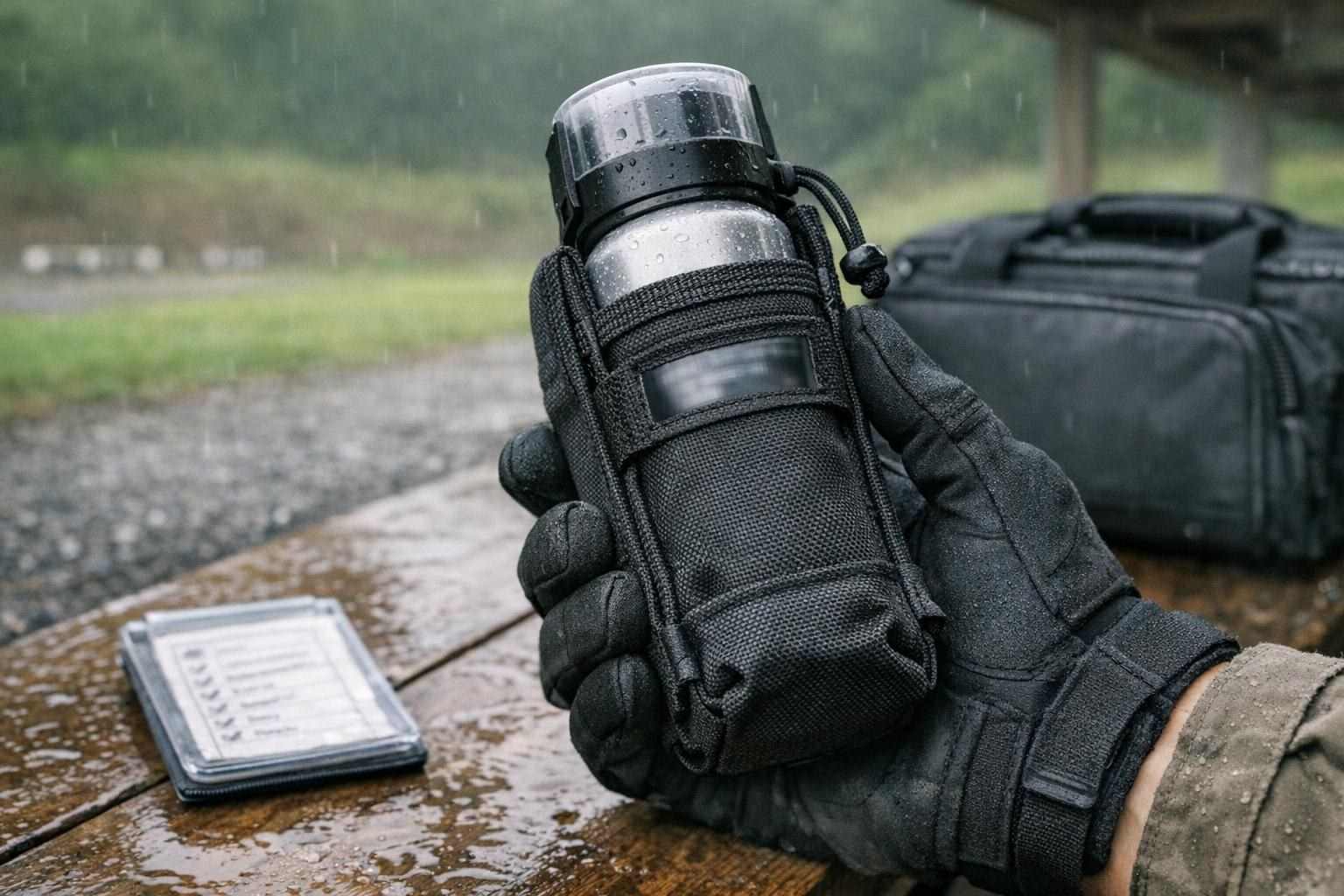
The date printed on protective or less-lethal equipment looks more precise than it actually is. The service life of some articles is clearly defined; for others there is no specific date but rather a function-related service life that depends on inspection, storage and the manufacturer's instructions. For reasons explained above, it is practical to read the marking on an article and make a decision whether to keep it, test it, replace it or even to retire it before a range session or an emergency situation.
Separate a true expiry date from a manufacturing mark
A Use-By date printed on packaging must be distinguished from the Manufacturing Date (or Manufacture Date) or Lot/Batch number printed on products such as packaging, LESS-LETHAL-control devices etc. Although the date printed on packaging must be adhered to by the Supplier, this code in no way helps the owner of less-lethal equipment work out when the less-lethal item should be discarded.
Read the label, the packaging box insert (if supplied) and the current manufacturer's guidance for that item before making any decision. It is surprising how codes that are obvious to suppliers can be completely misunderstood by users of that equipment. Make sure you understand what a code means before you use it to make a decision. Note that requirements and product guidance can change so make sure you are getting the most up-to-date information from a suitable supplier or retailer.
Sealed items such as spray ampoules and revolver cartridge containers should be treated with more respect when reading the expiration date printed on the packaging. Even if they look 'OK', and still contain the remnants of product, there's often little point in using up the remainder. No savings are made as safer alternatives are available on the market.
Which items need a calendar-based replacement plan?
A calendar based replacement plan is best suited for less-lethal defense equipment consisting of materials, which may deteriorate while stored for long periods of time. Examples of such items are certain types of defensive sprays, various medical supplies, disposable filters, batteries, strobe lights, etc. The service life of such equipment is usually printed on the item itself and must be adhered to by the owner.
Some safety items are of robust construction and therefore their age is less critical than their condition. Examples of such items are eye and hearing protectors, gloves, pouches, holsters and storage cases. They may last for many years but degrade over time due to exposure to heat, chemicals, wear and tear etc. Therefore it is generally better to rely on a visual inspection of such items than to replace them after a set period of time.
While age alone does not dictate whether to discard items, older gear can degrade such that materials become brittle, stick together, develop cracks, lose flexibility or otherwise deteriorate and break. This makes the calendar-based reminder helpful in also remembering to inspect older items like these for signs of potential failure.
Inspect the item, not just the label
Once you have purchased your less lethal defense you need to check for any damage prior to using it in a range or in a legitimate self-defense situation. Begin by checking for any signs of wear on the packaging. Once you open the packaging, inspect the equipment for any broken seals, swelling, leakage, corrosion, cracks, frayed stitching, distorted or brittle plastic, or degraded elastic. Also, check for any cloudy or dirty lenses and make sure all closures are secure.
Remember not to test your products for use before you intend to use them. Be careful not to open chemical or pyrotechnic pressurized products even to check if they are still OK. Such products must be checked according to the manufacturer's recommendations. If in doubt, then it's best to err on the side of caution and to replace them.
Before purchase also consider whether the same or like equipment will be left in storage. All protective equipment must fit the user. Even equipment in apparently good condition must be of suitable size and to match the intended use for which it is to be used. The equipment to be purchased will also need to be of a design to be left in storage and to be easily retrieved for use.
Storage conditions can shorten the useful life
Many products have an expiration date printed on the packaging. However, this date also assumes that the product has been stored correctly. Items that are exposed to excessive heat, freezing, moisture, sunlight, solvents, or oils can degrade significantly. The interior of a locked vehicle, shed, or even an uninsulated closet can store products in a far worse state than they appear to be.
Safety equipment is best stored in a clean, dry place away from chemicals, and ensuring that the equipment is not subject to crushing or undue friction. Disabling firearms when stored, and ensuring that there is no chance for them to be accidentally picked up by children or anyone else, also ensures safe storage of related safety equipment.
Unknown storage history must be approached with extreme caution. Items left over from old ranges, received as hand-me-downs, or left in old range bags will differ from newly purchased equipment that is stored in optimal conditions.
Compare replacement choices before buying
Many of the lesser-used items can be replaced by a better alternative (e.g. same function but better retention, labeling, size etc) at the time of need for use at a range. There are many 'lesser' items of less-lethal equipment for which comparison of date marking, storage requirements, means of inspection and means of disposal will give a better 'all round' replacement option than price alone.
Look at all the features such as date marking, storage, inspecting and disposing of less-lethal equipment when considering cost of alternatives. Purchasing cheaper items that cannot be monitored for service life could end up being more expensive in the long run than purchasing higher cost items with better marking and a service life that can be more easily managed for replacement.
When looking for a replacement also compare compatibility of carriers, pouches, batteries, holsters and other protective accessories with the less-lethal equipment that you will be using. Just because an item looks similar does not mean that it is compatible with your less-lethal equipment. Watch for changes in packaging and product names and make sure that you have kept the documentation for the item that you have purchased.
Build a simple inspection and replacement schedule
Set a reminder for the date printed to arrive at the store before the item is to be retired. Keep a record of purchase date, marked expiry date or replacement date, where stored and what lot number it is. In this way it is easy to note when the time comes to retire it and swap it for new stock.
Every time you go for a shoot or a range day check the less-than-off-the-shelf safety gear you expect to use. Check less frequently used items of safety gear at regular times and as with all the above items of safety equipment, retirement of any item of safety equipment should be clearly and visibly marked and disposed of according to the manufacturers' disposal instructions, or that of the municipality or local authority where you reside.
Mistakes when setting up a safety equipment storage are, amongst others, to assume every number printed on a safety item is an expiry date, to neglect storage conditions, to keep defective items (even if never used before) and to put off checking for required spare items until the last minute, e.g. the day before a shooting lesson or range trip.
Wait a minute! You have doubts as to the date or the condition of your safety equipment. In such cases you should verify the information by contacting the manufacturer and/or the relevant authorities. For your own safety and for the sake of sound purchasing decisions you need clear information about the safety equipment that you own.